Helaine Blumenfeld sculptor

I acquired a piece of art by artist #HelaineBlumenfeld, OBE. The piece I added to my collection is not a sculpture, which she is most renowned for, but a print. Blumenfeld was born in New York in 1942. She studied political philosophy at Columbia University but moved to Paris to train in sculpture. Her tutor at the Ecole de la Grande Chaumière was the Russian Cubist/painter/sculptor #OssipZadkine. Blumenfeld later studied with #SemGhelardini learning to carve marble/stone. Blumenfeld’s sculptures have a fluidity of form, so we the viewers behold a creation standing between abstraction and reality. Blumenfeld carves in wood, granite, marble, and casts in bronze in the creation of her pieces. She is renowned for her large-scale public sculptures.

Helaine Blumenfeld print @ 1978

Above is the print I acquired. It like her sculptures is fluid. Curves, waves, flowing and melding in form and colour producing a final image of beauty.

Signed and dated 1978, Blumenfeld would have created this shortly after her move to Grantchester, Cambridgeshire, in 1970.
Posted in Modern prints | Tagged , , , , , | Leave a comment

Leopold Rivers artist

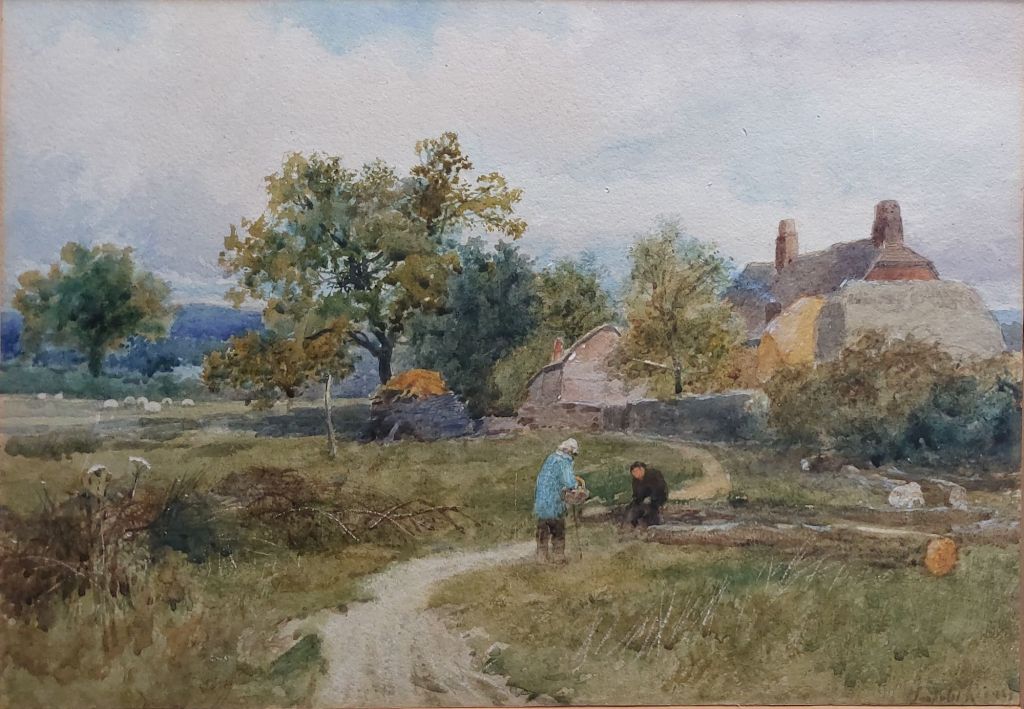
We look at a Victorian artist in this chapter. #LeopoldRivers (1852-1905) was a watercolour painter who studied under his father, #WilliamJosephRivers, who was also a well-known artist.  Leopold was born in London and lived in London all his life. His works display rural farm scenes, village scenes, marinescapes, and landscapes from the surrounding counties. Leopold exhibited at the Royal Society of British Artists and the Royal Academy.

The Old Farm – watercolour by Leopold Rivers @ 1890

We see a wonderfully atmospheric image of an aged farmer and his wife on a path leading to their home. A feeling of rest and peace is seen here even though life would certainly not have been easy. The use of light blue and dark brown on the clothing attracts the eye to the figures, but do not be deceived the rest of the work is just as detailed and finely executed. An emotive and beautiful piece to look upon.

Posted in Watercolour paintings | Tagged , , , , , , , | Leave a comment

William Daniell artist

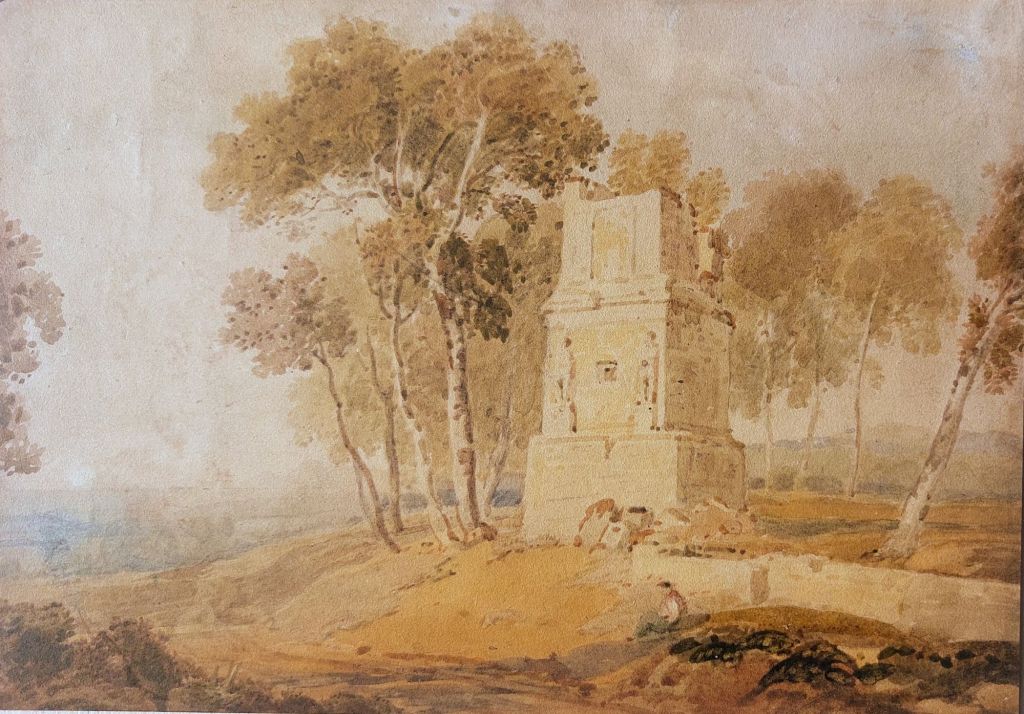
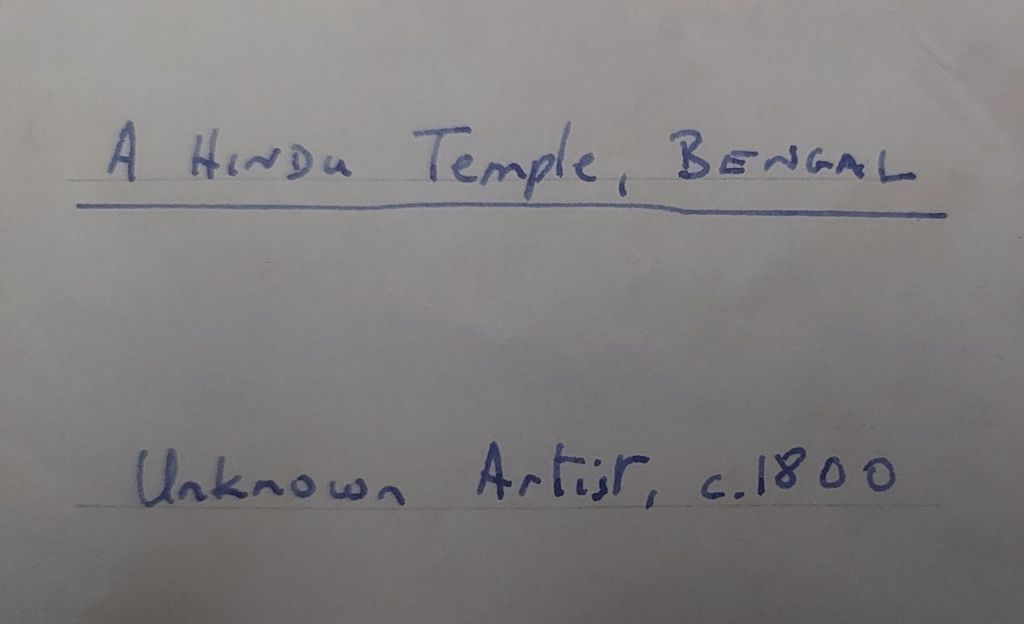
Recently, I came across a small watercolour sketch framed under glass with a label on the back.

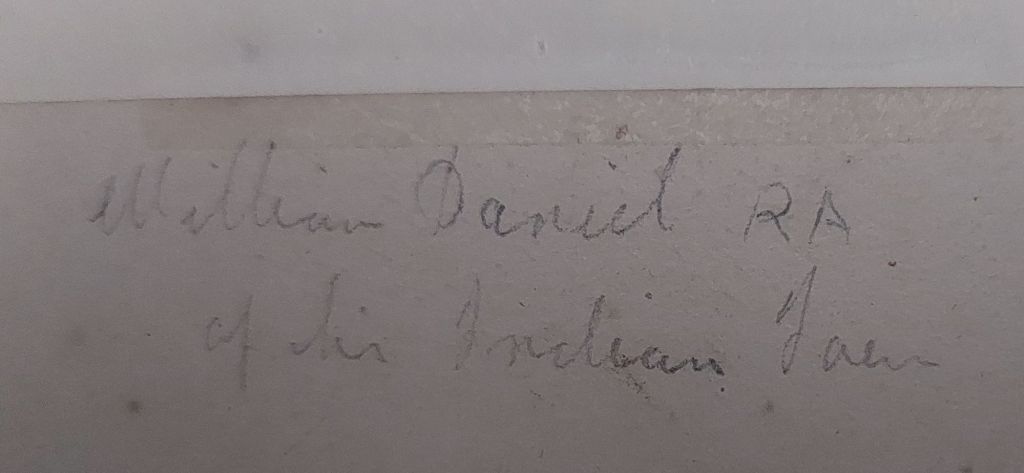
Label on back

The image looked like a temple, but dating it was optimistic since the sketch was not signed or dated, and the paper looked possibly old enough. I purchased it to add to my small Indian collection. I decided to open the back and see if I might be lucky enough to find more information on the verso of the sketch. To my delight, there was.

Attribution on verso

In pencil on the verso, the sketch is said to be by #WilliamDaniell (1769-1837) and stemming from his Indian tour. Daniell’s tour of India with his uncle Thomas occurred from 1786 to 1794, thus giving us an accurate date. William and Thomas produced ‘Oriental Scenery’ on their return to England. A foundational publication providing the British public a view into Indian architecture, landscape, and culture.

An Hindu Temple, Bengal – watercolour sketch by William Daniell @ 1786-1794

Daniell was a superb landscape painter and printmaker, but was most renowned for his detailed aquatints – 144 of which were used in Oriental Scenery .

To finish a couple of watercolours from 1862 by William Simpson, who also toured India.

Falls of Gairsoppa
William Simpson – watercolour @ 1862
Jumnotree, source of the Jumna – watercolour by William Simpson @ 1862
Posted in Drawings and Sketches, Watercolour paintings | Tagged , , , , | Leave a comment

Tower of the Scipios

I thought we would travel to Spain and the city of Tarragona to visit a Unesco World Heritage Site. The city, originally named Tarraco, was built by the Romans on the road ‘Via Augusta’ that ran from the Pyrenees to Gades (Cadiz). The tower has three levels and two relief carved images on the central level. Once believed to be representations of the Scipio brothers, Publius and Gaeus, the images are actually of the god Attis, deity of death and resurrection.

Tower of the Scipios – watercolour by anon @ 1800 to 1830

The tower was built during the 1st century AD. On the second level behind the reliefs is where the  burial chamber is found. It would contain some of  the deceased major possessions. Romans were not allowed to bury their dead within a town, so families would build funerary monuments on a road outside of town. The more important the person, the more lavish the monument.

The Romans were not allowed to cremate or bury their dead inside the town. Therefore, we always find them outside the walls and normally alongside a road. The tower was most likely built for two, a husband and wife or two brothers. It is unknown as to who built the tower but certainly was not the Scipio brothers.

The watercolour (over graphite), which I date to the first quarter of the 19th century, has aged well. It is a beautiful scene for an important historical site.

Posted in Drawings and Sketches, Watercolour paintings | Tagged , , , , , , , | Leave a comment

Richard Wallwork artist

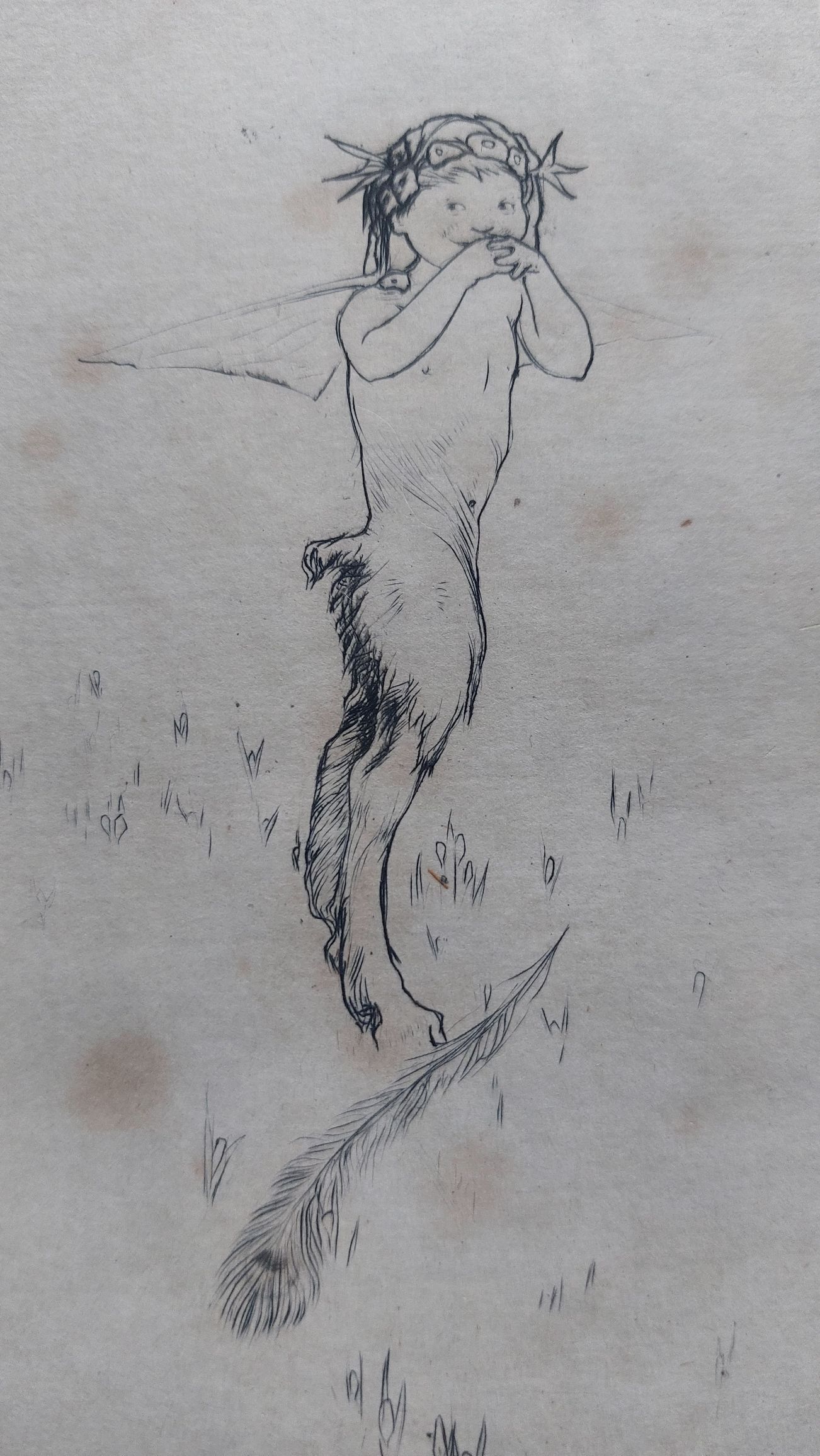
I have in my collection a small engraving which is very playful and fun. It was created by #RichardWallwork (1882-1955). Richard studied art at the Manchester School of Art and then went on to study at the Royal College of Art in London. After his studies, he taught at the Liverpool City School of Art. In 1910, he was convinced to teach at the Cantebury College of Art in Christchurch,  New Zealand. He and his wife, Elizabeth (also a fine artist), were well respected and Richard finished his teaching career as director of ghd college. 

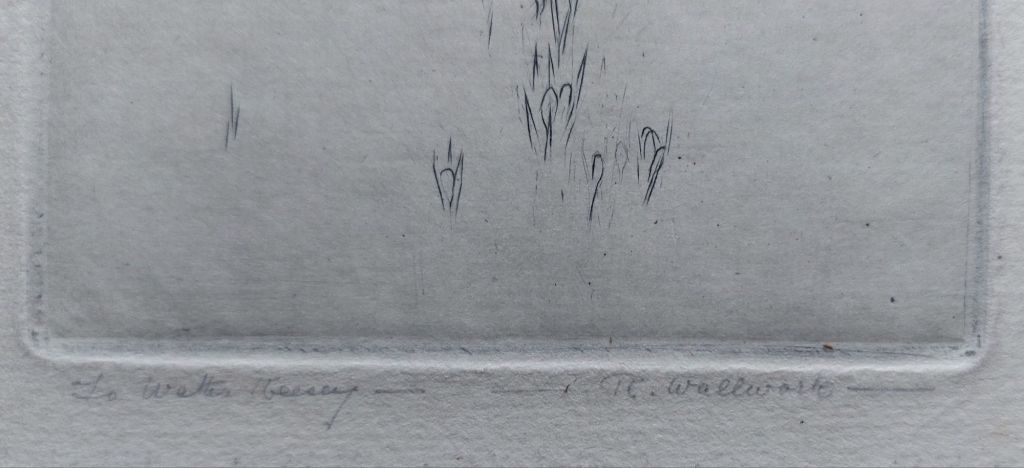
Dedication and signature below plate mark.

The piece is signed and has a dedication in pencil below the lower plate mark. It is dedicated to #WalterKeesey, who was a student at the Royal College of Art at the same time as Richard. So, I will date it to around 1910.

Mischievous Faun – engraving by Richard Wallwork – dedicated to Walter Keesey @ 1910

A youthful laughing faun with a large feather at his hooves shows that he has been up to mischief. A mischievous and playful piece.

Posted in Etching | Tagged , , , , , | Leave a comment

Ioseph Brodtmann lithographer

We look at an item this artist is not well known for today. #IosephBrodtmann or Karl Joseph Brodtmann (1787-1862) was a Swiss lithographer. He was considered to be among the finest engravers of his time. Ioseph is best known for his depictions of animals and birds. His works were beautiful and extremely accurate, for often, images like the ones he created were used for scientific research and education purposes.

But we are going to look at a piece which displays the life of the working people.

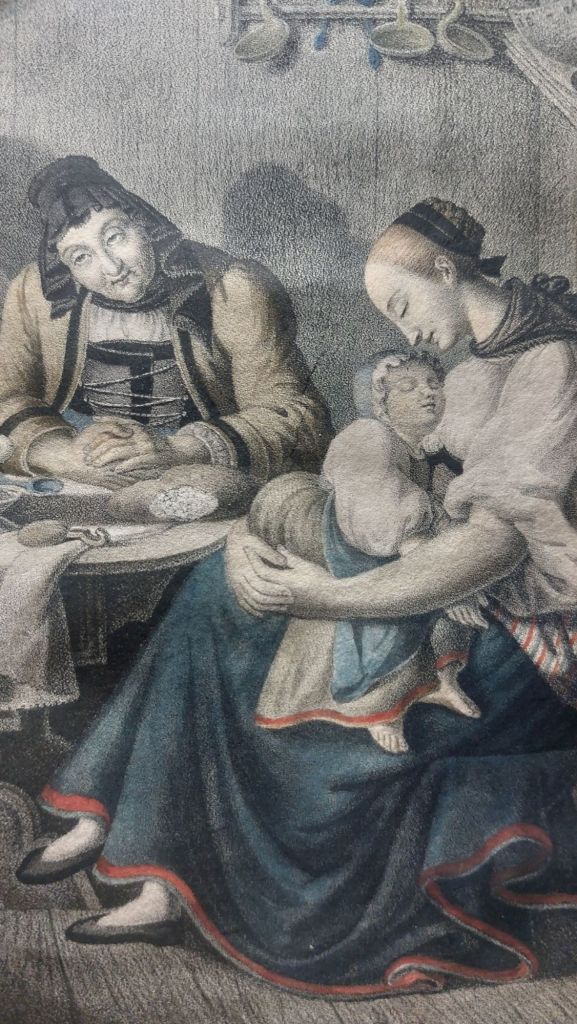
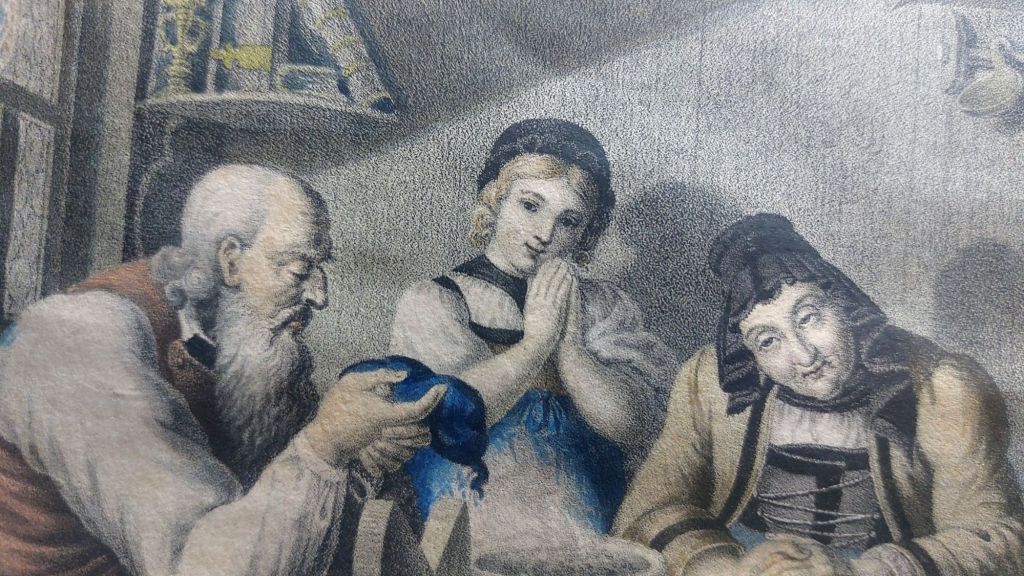
#LaPriere – #Lithograph by Ioseph Brodtmann after #LudwigVogel

The scene set before us shows a family gathered around their dining table, heads bowed in prayer, giving thanks for what they are about to receive. A bowl of potatoes, a truckle of cheese, and a loaf of bread or a piece of ham. Meagre by most standards today but yet sufficient.

Child sleeping

When I look at this image there, I see thankfulness and contentment. There is food to eat, a roof over their heads, and children – hope for the future.

Giving thanks

Exquisitely rendered onto stone by Brodtmann and later sympathetically and judiciously coloured, which has imbued a strength we rarely see today. I can understand why Brodtmann was one of the great lithographers of his time. The plate was printed by Henry Fuessli & Co. (1792- early 21c)

Posted in Lithographs | Tagged , , , , , , , , , , | Leave a comment

An Armorial Baluster Vase

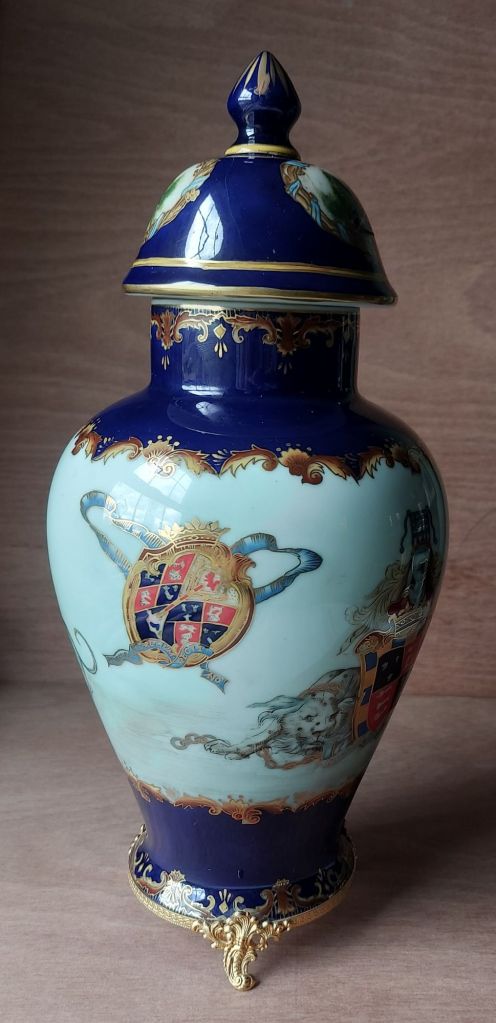
I do not regularly collect ceramics, but I recently came across an armorial baluster vase, which I thought was worth purchasing. An #armorialbalustervase is tall and made of soft-paste porcelain. It may or may not have a lid. They originated in China, where they were used to transport liquids. In Europe, they became more of a decorative item. Those with lids were often created in pairs or sets for decorative use and are known as a ‘garniture’. Those without lids were meant to display floral bouquets or other items. The lids were often decorated with small finials such as lions or flower buds as well as being decorated in the same style as the vase body.

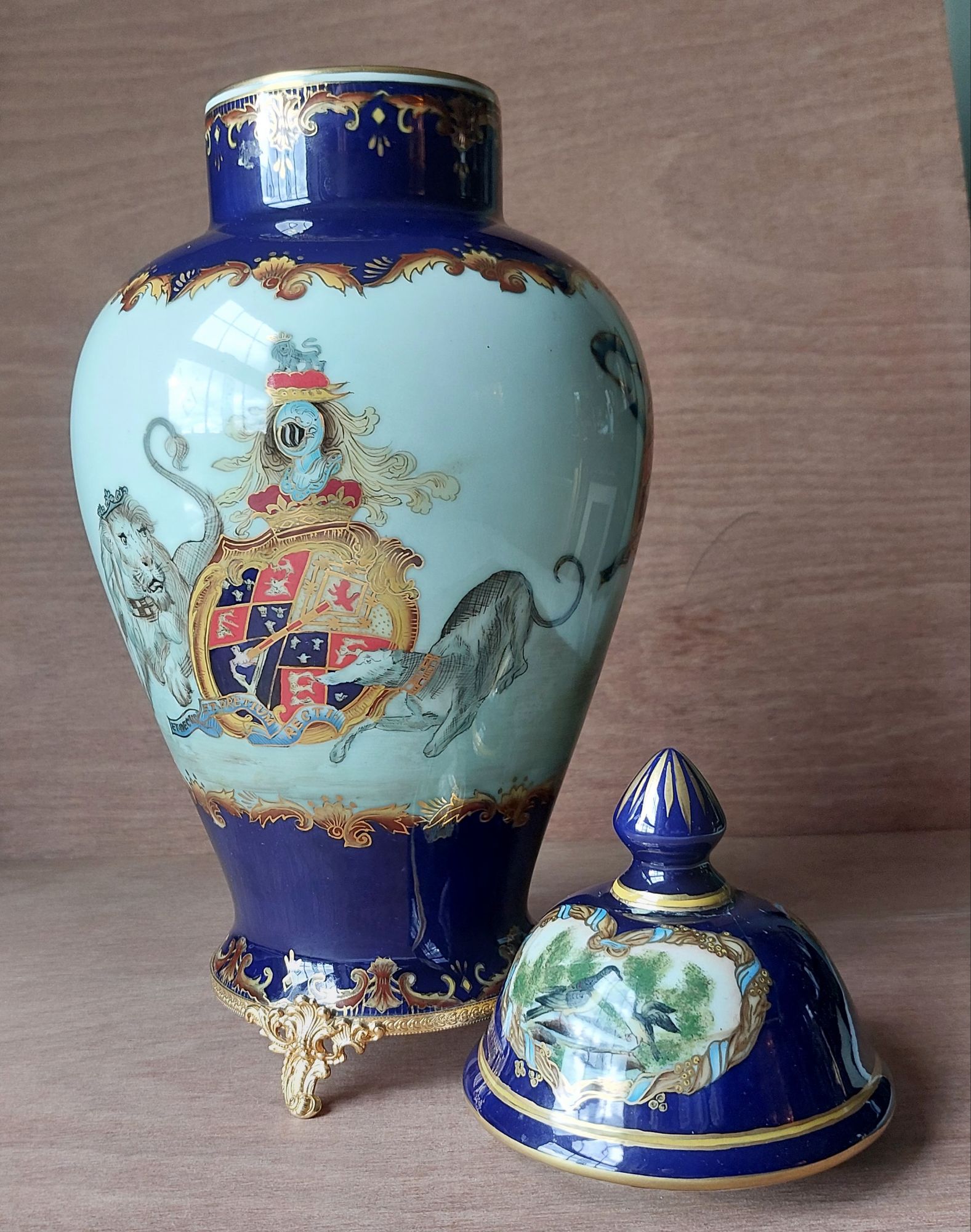
Complete ‘Coat of Arms’ of The Duke of Grafton @ 1790
– on a baluster vase with lid

As seen, the vase bears the Coat of Arms of #TheDukeofGrafton. This version of the seal dates from around 1790. The motto reads as Et Decus Et Pretium Recti “Both the ornament and the reward of virtue.” As we rotate the vase, we see the arms portion without its supporters, crest, mantle, and helm.

Duke of Grafton ‘Coat of Arms’ only

On the very opposite from this insignia, we find the #Beaufort/Somerset family crest. The arms are once again displayed without its supporters, crest, mantling, and helm.

Beaufort/Somerset Coat of Arms

The Grafton family and the Somerset/Beaufort family are joined through the marriage (1711) of Charles Fitzroy, 2nd Duke of Grafton to Lady Henrietta Somerset, who was the daughter of the Marquess of Worcester.

Beaufort/Somerset Coat of Arms

Opposite the Duke of Grafton’s family crest, we find the full crest of the Beaufort/Somerset family. The motto on the banner reads Mutare Vel Timere Spermo “I scorn to change or fear.” Once again, I believe this version of the crest dates to the late 1700’s.

The vase is completely hand decorated. It bears no signature or date, so I will hazard a guess that it it a 19th century piece but could possibly be the 18th century. A finely produced piece.

Posted in Ceramics/Pottery | Tagged , , , , , , , , , | Leave a comment

Cornelius Pearson artist

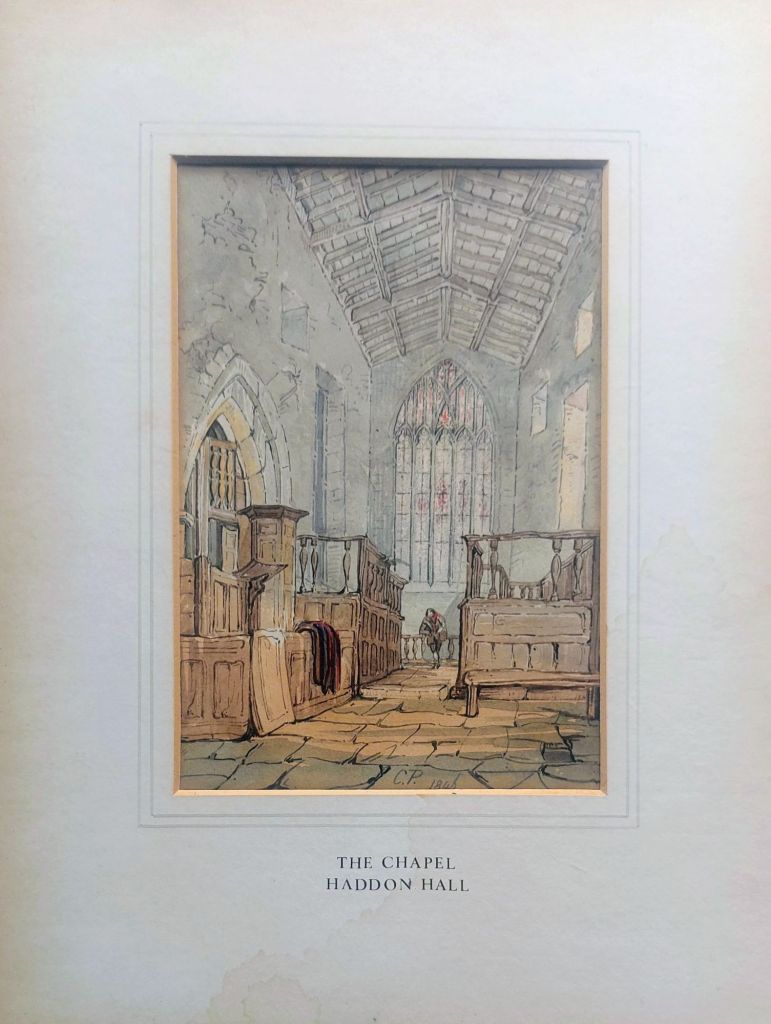
Today, we look at a small watercolour from my collection. It was painted in 1846 by #CorneliusPearson and shows The Chapel at Haddon Hall. Pearson was a landscape and topographical painter who also dabbled in engraving. He was born in Boston, Lincolnshire, but moved to London while young to apprentice under an engraver. Here, he began to paint in earnest and worked mostly in watercolour. He exhibited regularly showing more than 145 works over the years.

#TheChapelofStNicholas at #HaddonHall (pictured below) has a set of rare wall paintings most likely done in the 15th century and some very fine stained glass windows.

The Chapel, Haddon Hall – watercolour by Cornelius Pearson @ 1846

Haddon Hall sits on the River Wye near the town of Bakewell in Derbyshire and is the former seat of the Dukes of Rutland. Haddon Hall is one of England’s most elegant stately homes and over 900 years old. It is an important historical residence and a fine example of Tudor and Elizabethan architecture. It also boasts a walled rose garden as well as the ancient Haddon Medieval Park.

The Chapel, Haddon Hall – watercolour by Cornelius Pearson @ 1846
Posted in Watercolour paintings | Tagged , , , , , | Leave a comment

The Song of Songs

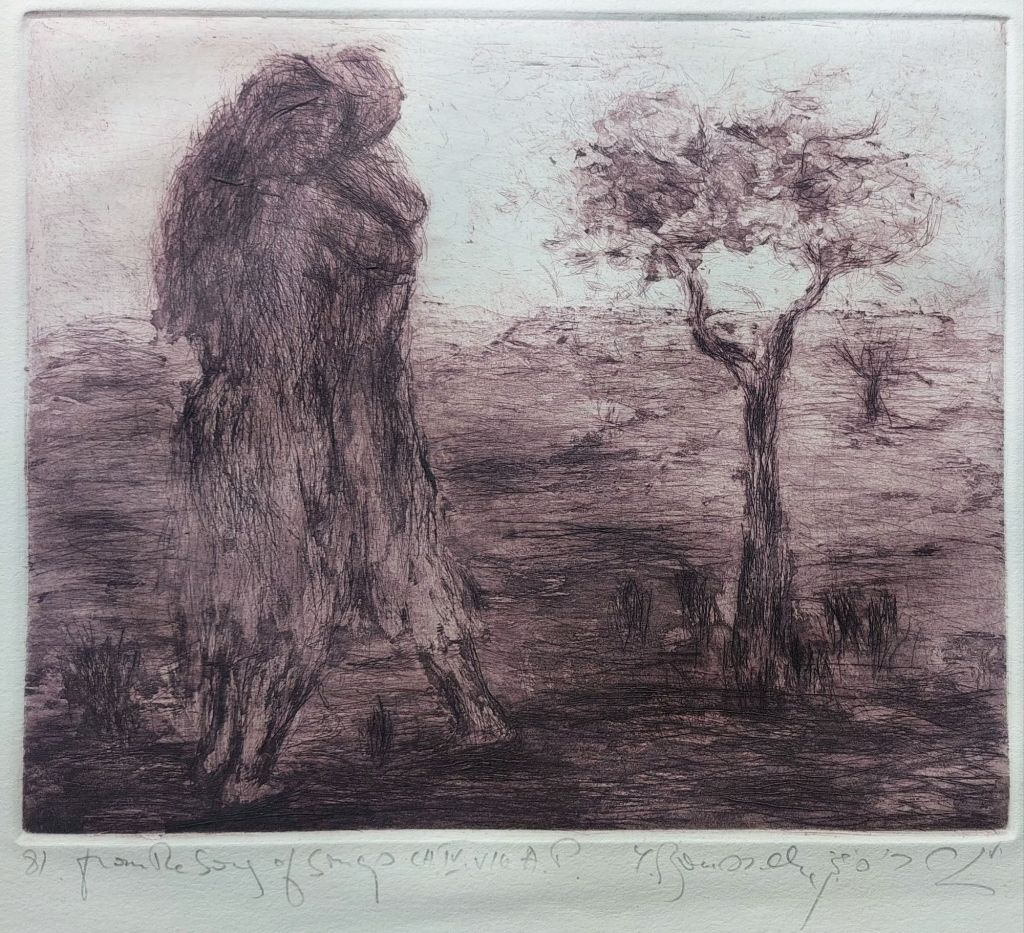
We look, today, at an artwork created for #TheSongofSongs” (Song of Solomon) from the Old Testament. The image relates to chapter 4 and verse 16.

Awake,O north wind,
And come, O south!
Blow upon my garden,
That its spices may flow out
Let my beloved come to his garden
And eat its pleasant fruits.

‘From The Song of Songs’ engraving (artist proof) by Ya’akov Boussidan @ 1981

The artist is #Ya’akovBoussidan. He was born in Port Said, Egypt, in 1939. Boussidan is a painter, a sculptor, and a printmaker. When he was ten, he and his family were exiled from Egypt due to the Arab-Israeli war. Boussidan was interested in the furtherance of Jewish tradition through his art. At the mature age of 27, Ya’akov travelled to London to study printmaking at Goldsmith College. With access to presses and printing facilities, Ya’akovs’ love of the colours ‘black and white’ were brought to the fore. His technique of etching was refined, along with the mastering of mixing his own inks brought a more focused approach to displaying his thoughts. A few different shades of black can bring warmth or coolness to an image.

From ‘The Song of Songs’ ch 4 v 16 – engraving (artist proof) by Ya’akov Boussidan @ 1981

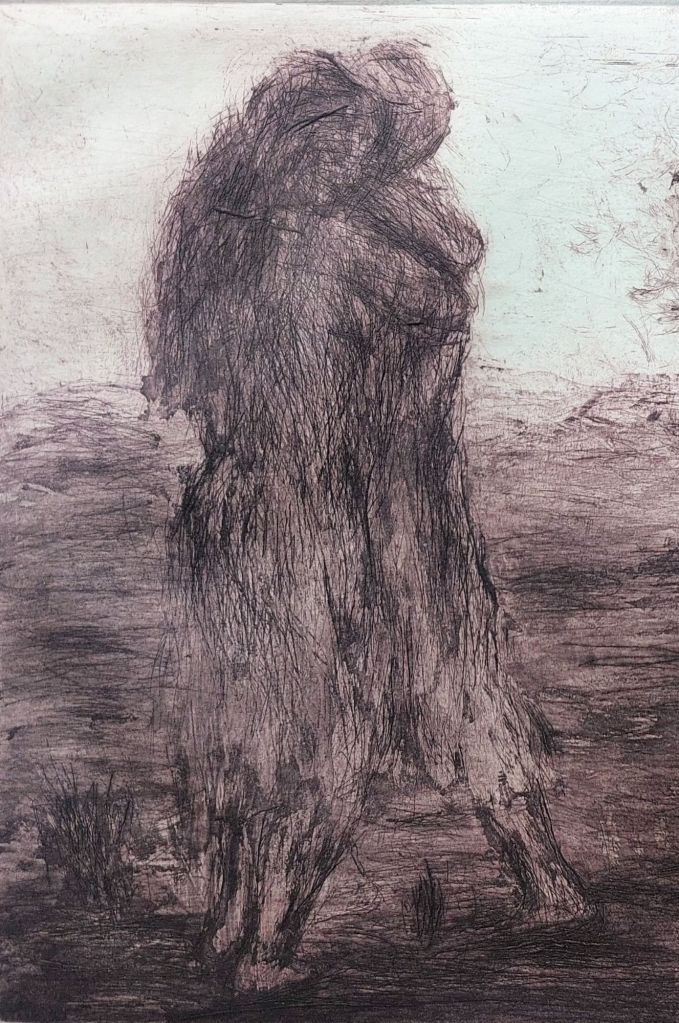
Boussidans’ ‘The Song of Songs’ was published in 1982. It was limited to 200 copies and contained not only the 8 offset lithographs but also one original engraving from the set. I love the way the two bodies male and female meld into a unified form. Two shall become one. It is an absolutely beautiful piece to look upon.

Posted in Etching, Mezzotint | Tagged , , , , , | Leave a comment

Carl von Dombrowski artist

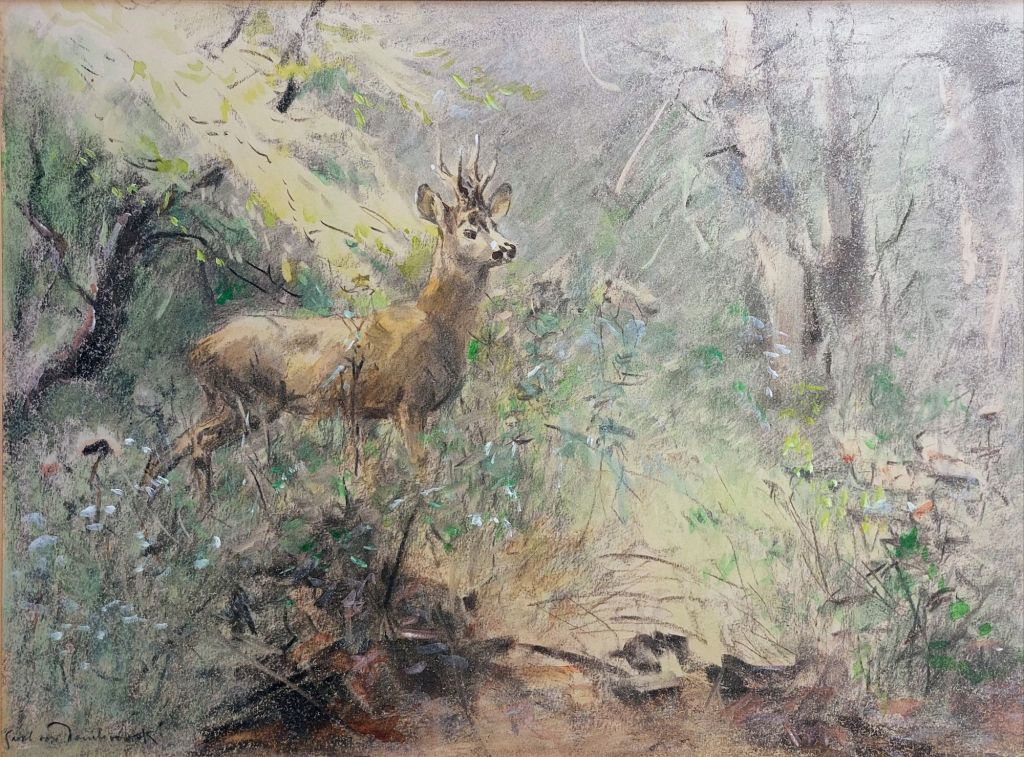
Today, we look at a German artist who specialised in animal and hunting scenes. #CarlvonDombrowski (1872-1951) studied at the art Institutes in both Vienna and Munich. Many of his works were produced as woodcuts for Die Gartenlaube (The Garden Arbor – Illustrated Family Journal). It was the first successful mass-circulation German newspaper and paved the way for all modern magazines. The magazine aimed to reach all members of a family by providing articles on current events, biographies, short stories, poetry, essays on science ,history, etc, and full page illustrations.

Roebuck looks attentively out from the bushes – watercolour by Carl von Dombrowski @ 1920

Dombrowski worked in watercolour and oil. The above piece is done with charcoal, watercolour, and body colour and is a fine example of his work. It is undated, but I would date to @ 1920.

Posted in Drawings and Sketches, Watercolour paintings | Tagged , , , , , | Leave a comment